I take care of you better than myself.
Anyone who ever owned a bike
Cleaning your bike properly is always a hassle, but it pays off in terms of lifespan, not to mention the satisfaction of looking at your nice clean bike while the reflection of your surroundings is perfect on the freshly washed surface.
I was volunteering at a motorcycle rental and tour operator agency for accommodation and free motorcycle rides in Colombia, and one of my tasks was to clean the bikes. I did not mind it at all, and I did my job thoroughly, but the result was far from what I could achieve back home, this got me thinking, and after researching the possible methods advertised in the internet I came to the following conclusion.
Everyone agrees, you should never wash your bike when the engine is still warm. It can heat up to 84-98°C, on some models even higher, spraying cold water on it would damage the block and many other delicate pieces. If you think about it, taking your bike to a drive-in washer and waiting for the engine to cool down just doesn’t worth your time if you have the option to do it at home.
As an Amazon Associate I earn from qualifying purchases, but the described methods and products are the result of extensive research and personal experience.
Cleaning the chains on the motorcycle
The only chains that sets you free
Two wheels of Nirvana
Many article mention this as an optional step, but those with a mechanic background agree, that you should clean and lube your chains at least once a month, that is if you have not put it through some rough time during your last trip.
The easiest way to get your chains clean is to use a lint-free cloth and just wipe off the exterior muck. Repeat this process until the cloth stays clean. A moderately advance method, and mechanics use it as well, to clean the chain properly without removing it from the bike is using a degreaser and a chain-brush. Apply the degreaser to the chain with the brush and remove any gunk from the chain during the process. Wipe the chain clean at the end with the cloth.
In case you are not washing your whole bike make sure you apply water on the chain and re-lube it once it’s dry.
Traditional way
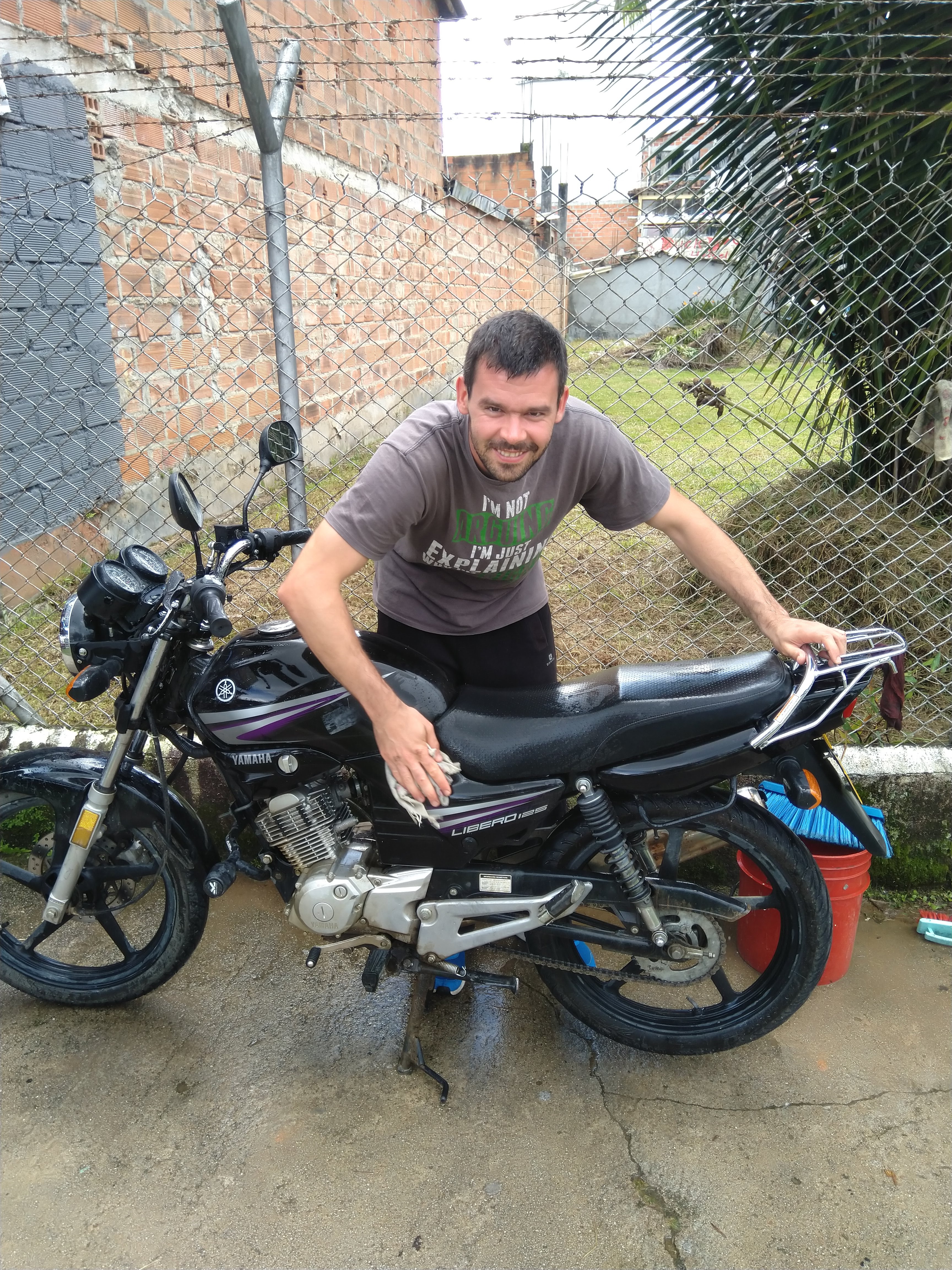
The traditional way of cleaning your bike includes:
- A bucket for soapy water
- Soap or liquid detergent of the automotive cleaners variety
- Gloves – optional, but highly recommended
- Bug and tar remover for the nasty little buggers 😁
- WD40
- Degreaser
- A brush for wheel cleaning
- Wheel cleaner
- At least two microfiber or 100% cotton sponges
- A variety of soft cotton towels and more abrasive rags
After letting your bucket of water warm up on the sun to avoid temperature shock, you can mix your favorite brand of soap to it. I recommend this automotive specific brand to avoid any scratches on the polish.
Dead bugs and grime are the banes of every motorcyclist, but bug and tar removers work surprisingly well, and some people also use WD40 for this duty. Don’t scrub it too hard, to protect the paint.
Cleaning the hard parts (like, the swingarm and exhaust pipes) require different treatment. Using a degreaser, scrub each hard part thoroughly, making sure not to let the solvents touch paint or chrome with a rough rag.
Wheels can be difficult to clean, and a long-armed brush is usually the best way to scrub off brake dust and dirt. Apply a wheel cleaner first and let it settle before scrubbing it off. Chrome wheels will require specific cleaners, so be aware of your wheel’s finish before purchasing a cleaner.
Microfiber sponge is great way to clean a bike’s painted parts. Make sure to get the paint wet before scrubbing, so the soapy water can act as a lubricant and not scratch the paint. Only use 100 percent cotton or microfiber sponges, as other materials can cause damage.
Pressure cleaner
This method is mentioned to be harmful for the “delicate parts” of the motorbike and all of those are the ones that heat up during the ride. If you follow the rule: let it cool before washing it, then you’ll be fine.
The easiest one to add to your arsenal is the expendable garden hose. Just pop it onto your hose and you are good to go. But this still require you to have a shitload of rugs and sponges to apply the soap without damaging the paint.
My choice is the WORX Washer, that lets you attach a soap container at the beginning and remove it once the bike is ready for the shower.
You can go fancy with electric ones. The added benefit of adjustable water pressure and you can use them around the house as well.
The method is much simpler than the traditional one. After making sure the engine is not warm, apply clean water to remove the bigger chuncks of dirt from all around the bike. Make sure you get everything off from the stands, coolers, wheels and the splasher.
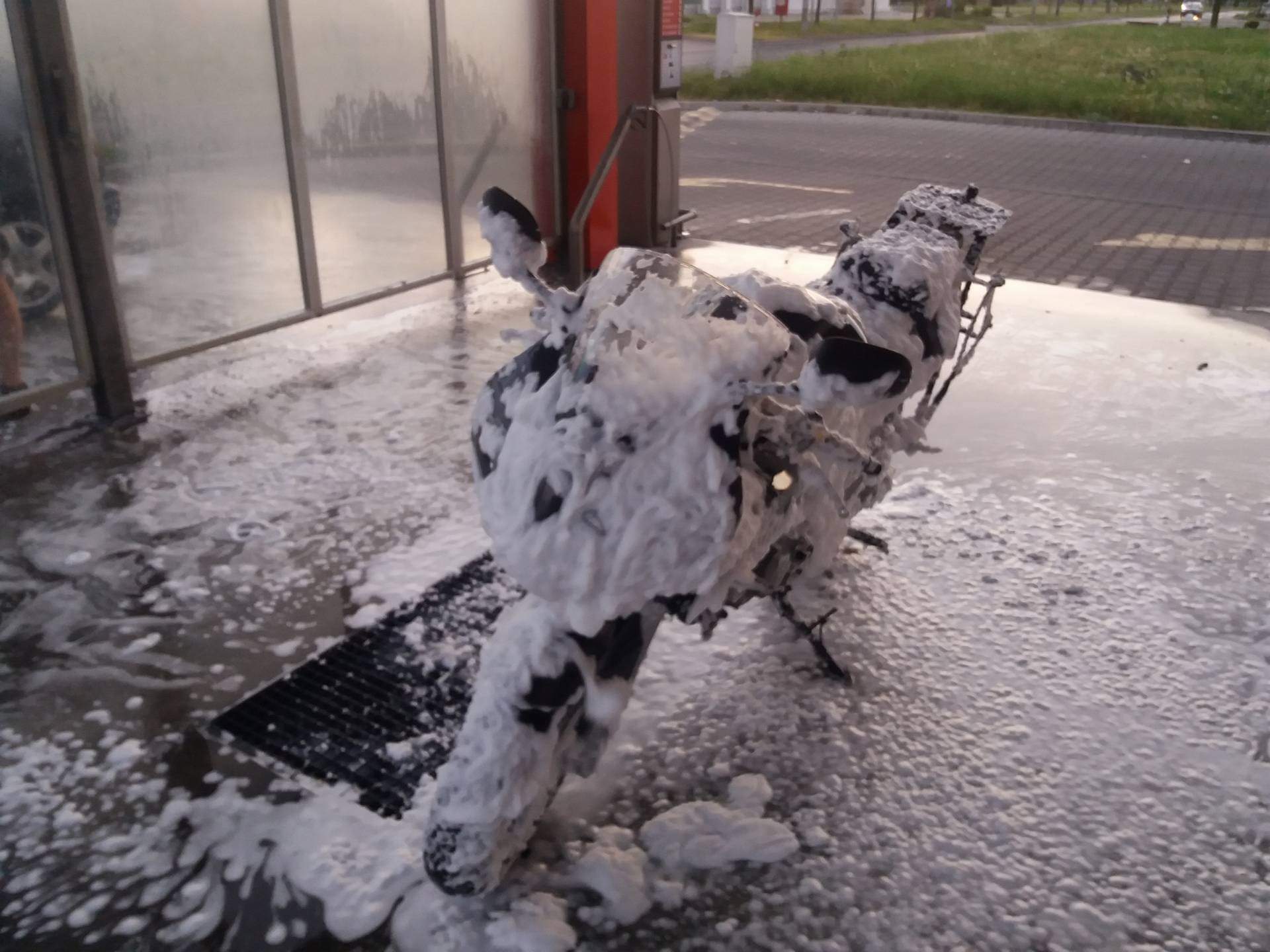
Use soap either manually or from the power cleaner and distribute it evenly on the bike. Let it sit for a minute or two. For better result you can use a microfiber sponge, but it’s not necessary if the bike hasn’t been through a rough time. Then water down the bike with plain water and voila.
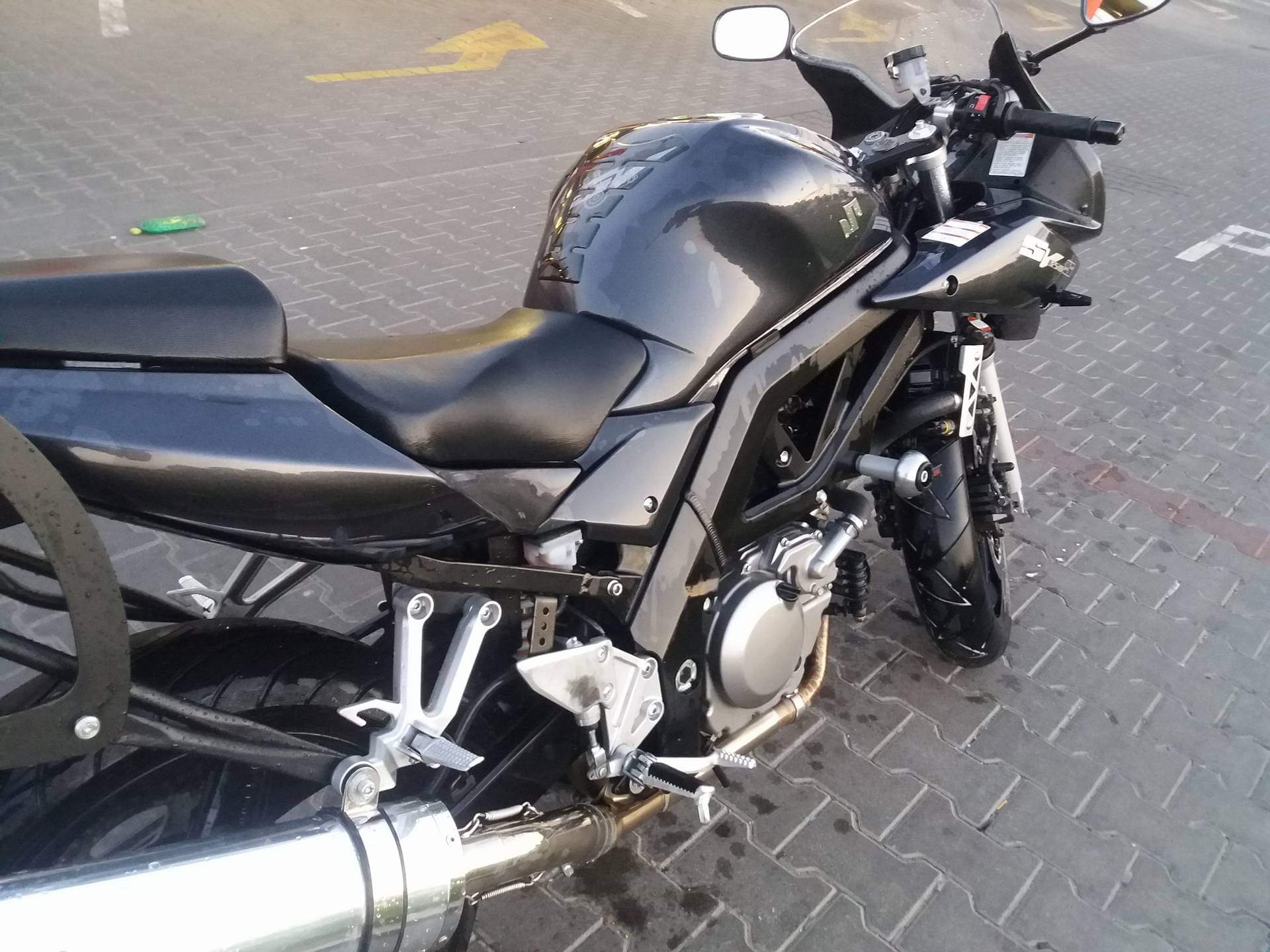
Dry the bike
Use a chamois cloth to soak up the moisture from the paint. The chamois will keep the finish from getting scratched, and prevent streaks and spots from accumulating. You can apply special finishers on the polish and plastic parts to make the bike look like it’s fresh out of the store.
Once the shiny parts are nice and dry, remove any residual water from the chains as well, then apply the lubricant evenly on the chain. Preferences for the best type of chain lube are vast and include everything from specialty items such as Maxima Chain Wax to regular ol’ chainsaw bar oil. The advantage of something like the Maxima wax is that it is much less likely to fling off of the motorcycle chain and make a mess on other parts of the bike.
 A Rider's Tale